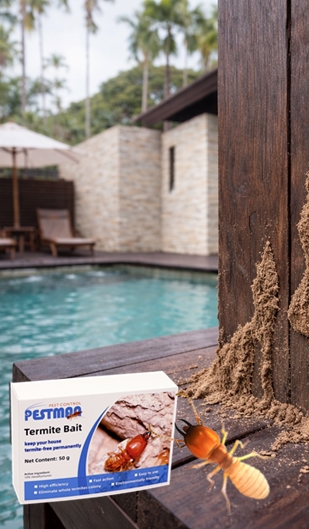
Mont Kiara, Kuala Lumpur — In one of Malaysia’s most sought-after residential enclaves, where tree-lined streets meet gated villas and international schools sit beside boutique cafés, danger rarely announces itself loudly.
Sometimes, it arrives as a thin brown line.
A Quiet Home, A Small Sign, A Growing Unease
The house sits on a gentle slope in Mont Kiara, a double-storey landed property built just over ten years ago. From the outside, it looks much like its neighbours — modern lines, pale stone walls, and carefully kept landscaping.
Inside live Daniel and Mei Lin, both in their early thirties, professionals who chose Mont Kiara not just for status, but for stability. The house was meant to be a long-term home.

The first sign appeared on an ordinary morning.
While cleaning behind the living-room television cabinet — a custom-made solid wood unit imported at significant cost — Mei Lin noticed something unusual at the point where the cabinet met the wall.
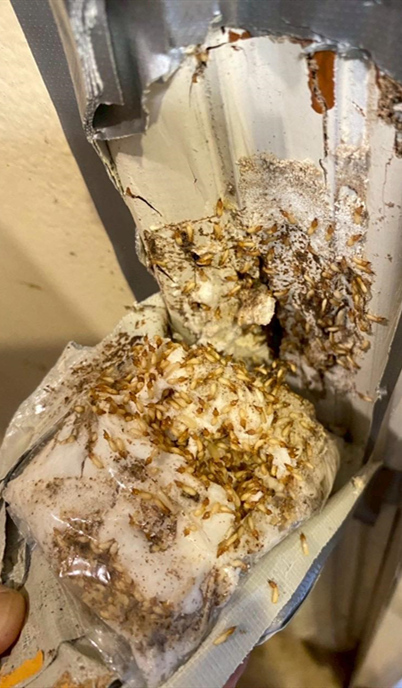
There were several thin, uneven brown lines. They looked like dried mud, no wider than a pencil lead.
At first, she assumed it was dust mixed with moisture. Kuala Lumpur’s humidity can play tricks on interiors.
She wiped them away.
Three days later, they were back.

When Rumours Become Personal
A few days after that, Daniel spotted something similar in the study. Along the skirting board beneath his built-in desk, the wood looked slightly swollen. When he pressed it gently, it felt soft — not rotten, but weakened.
The couple exchanged a look.
They had heard stories. In the Mont Kiara residents’ WhatsApp group, termites came up now and then — always described as expensive, disruptive, and stressful. Some neighbours talked about drilling, chemical smells, weeks of mess.
Until that moment, it had felt distant.
Now it was inside their home.
They scraped the mud lines again. Once more, the marks returned.
The unease deepened.
Calling in Professional Eyes
After a restless weekend, they decided not to take chances. Through a friend, they were referred to Kuala Lumpur Shield, a pest control company known in the Klang Valley for specialising in discreet, residential termite work.

The technician arrived mid-morning, carrying a small case of tools rather than heavy equipment.
He listened quietly as the couple explained what they had seen.
Then he began to inspect.
The Diagnosis Beneath the Surface
Using a rubber mallet, the technician tapped along the television cabinet backing. The sound changed almost immediately — from solid to hollow.
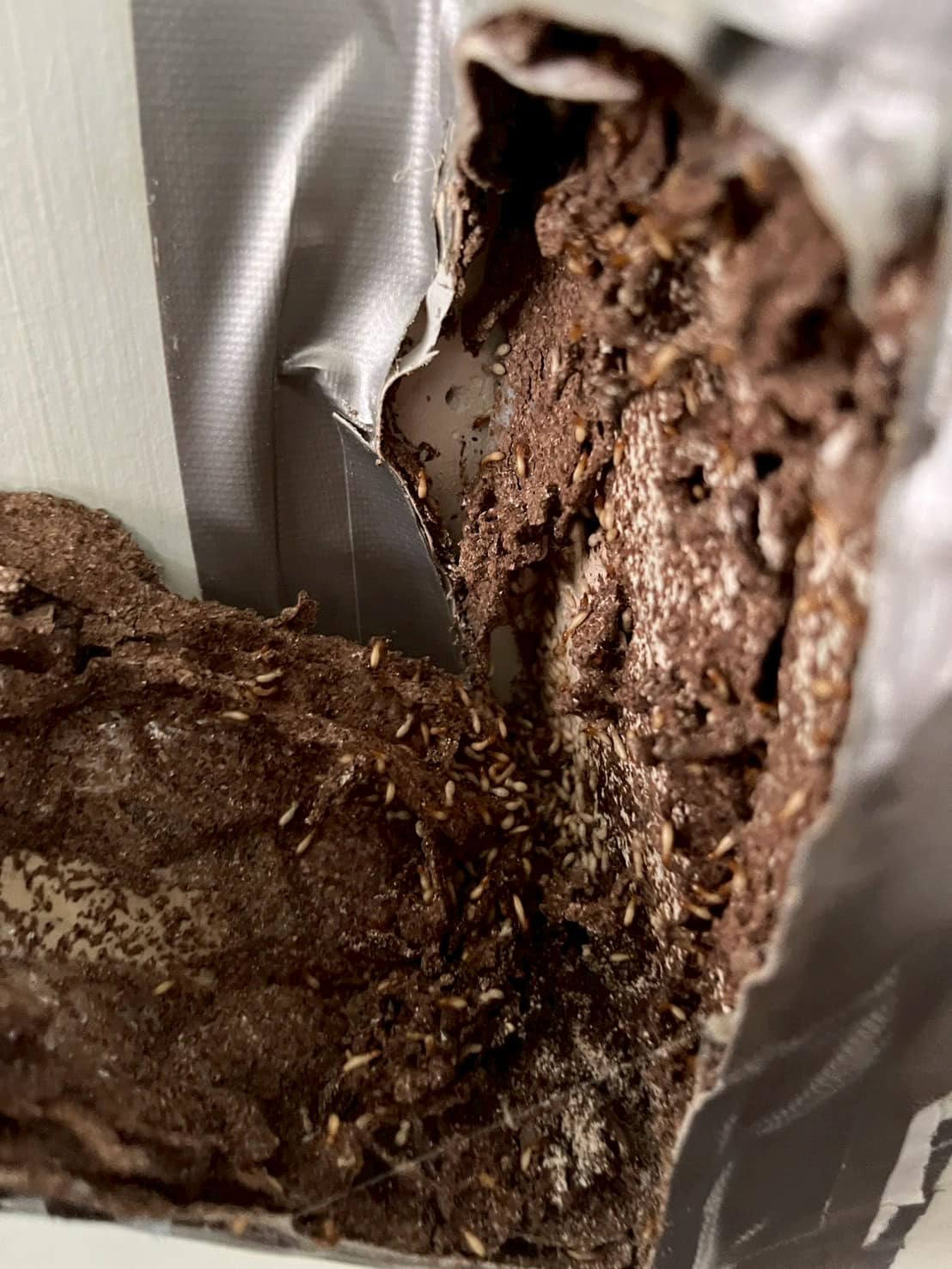
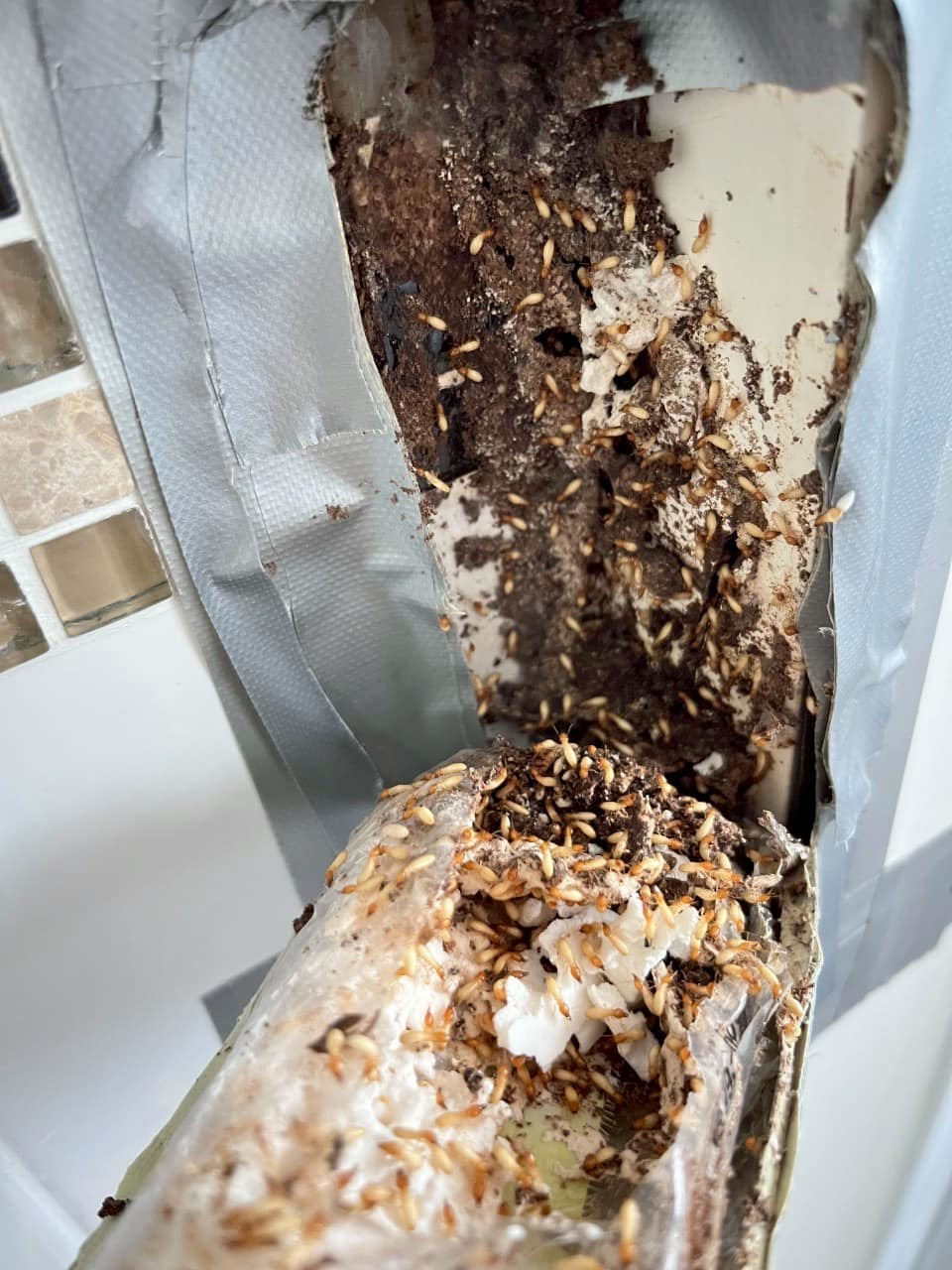
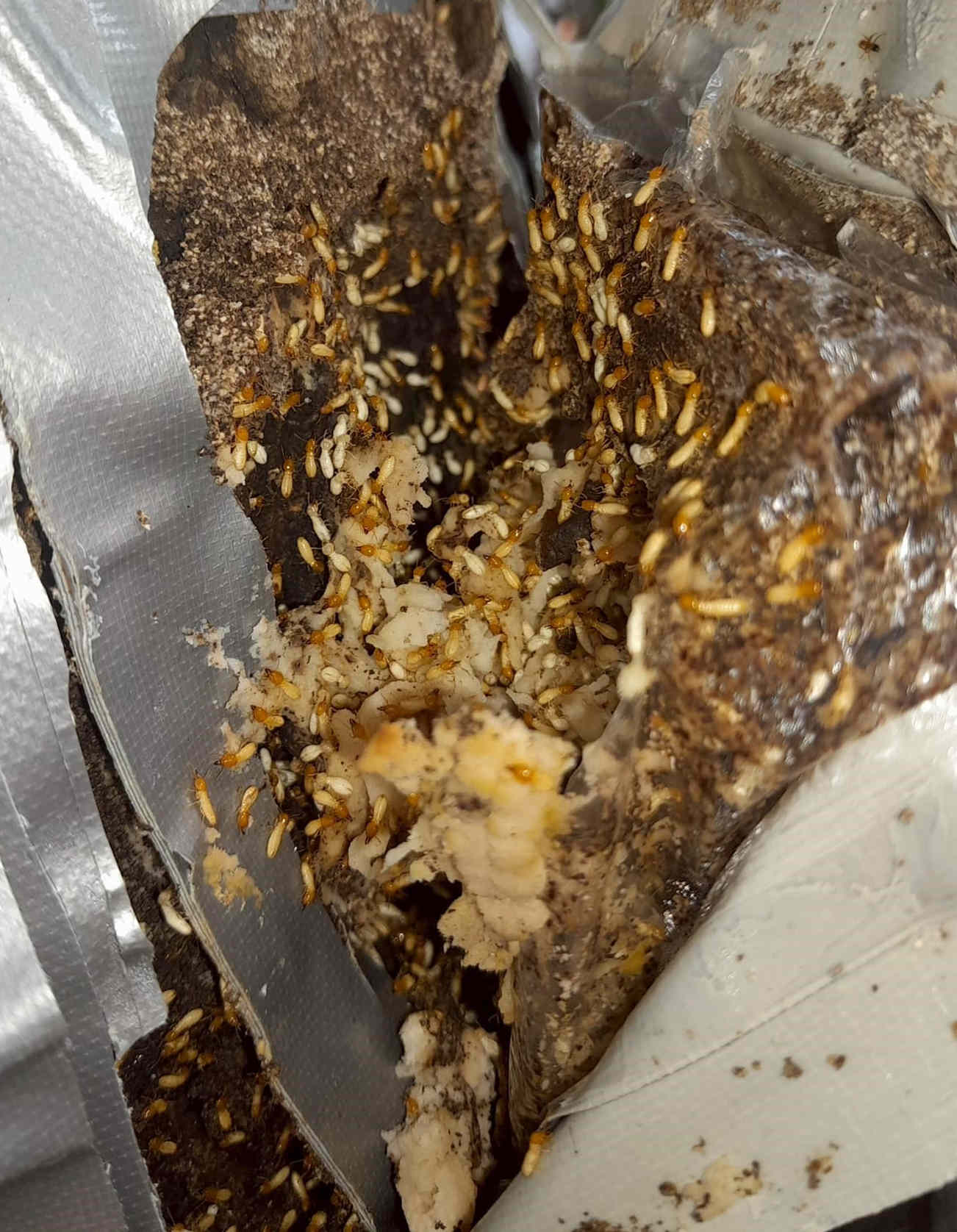
He removed a small section of skirting board near the desk and inserted a fibre-optic scope. On the screen, pale insects moved through narrow tunnels inside the wood.
“These are Coptotermes,” he said. Subterranean termites, among the most destructive species in Southeast Asia.
He traced their likely path: from the garden soil, through a hairline crack in the external wall, into the interior woodwork. The infestation, he explained, was still localised, but active.
That detail mattered.
Why “Big Treatments” Were Not the Answer
The couple braced themselves for the worst — drilling, chemical injections, days of disruption.
Instead, the technician shook his head.
“We could do that,” he said. “But it would be unnecessary — and risky for your home.”
He explained that aggressive treatments often caused termites to split and spread, creating new colonies deeper inside structures. For a house with high-end interior finishes, the collateral damage could exceed the pest damage itself.
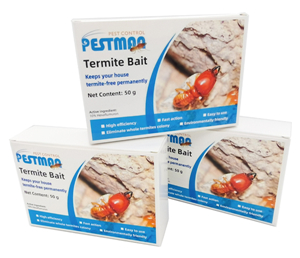
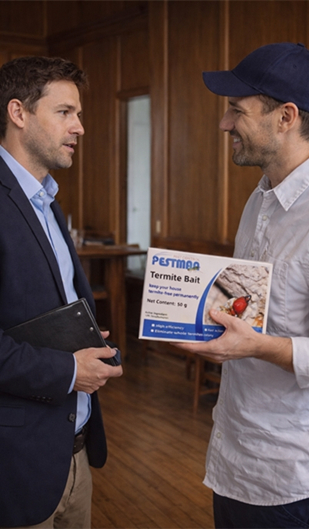
Instead, he proposed a targeted baiting strategy using Pestman Termite Bait.
The goal was not to chase the termites away — but to let them carry the solution back to their nest.
The Question That Changed Everything
Daniel asked the obvious question.
“How much will this take?”
The answer surprised them both.
“Based on what we’re seeing,” the technician replied, “two packs should be enough.”
Each pack weighed 50 grams.
No drilling through walls. No fumes. No evacuation.
Just precise placement.
How Two Packs Became a Silent Weapon
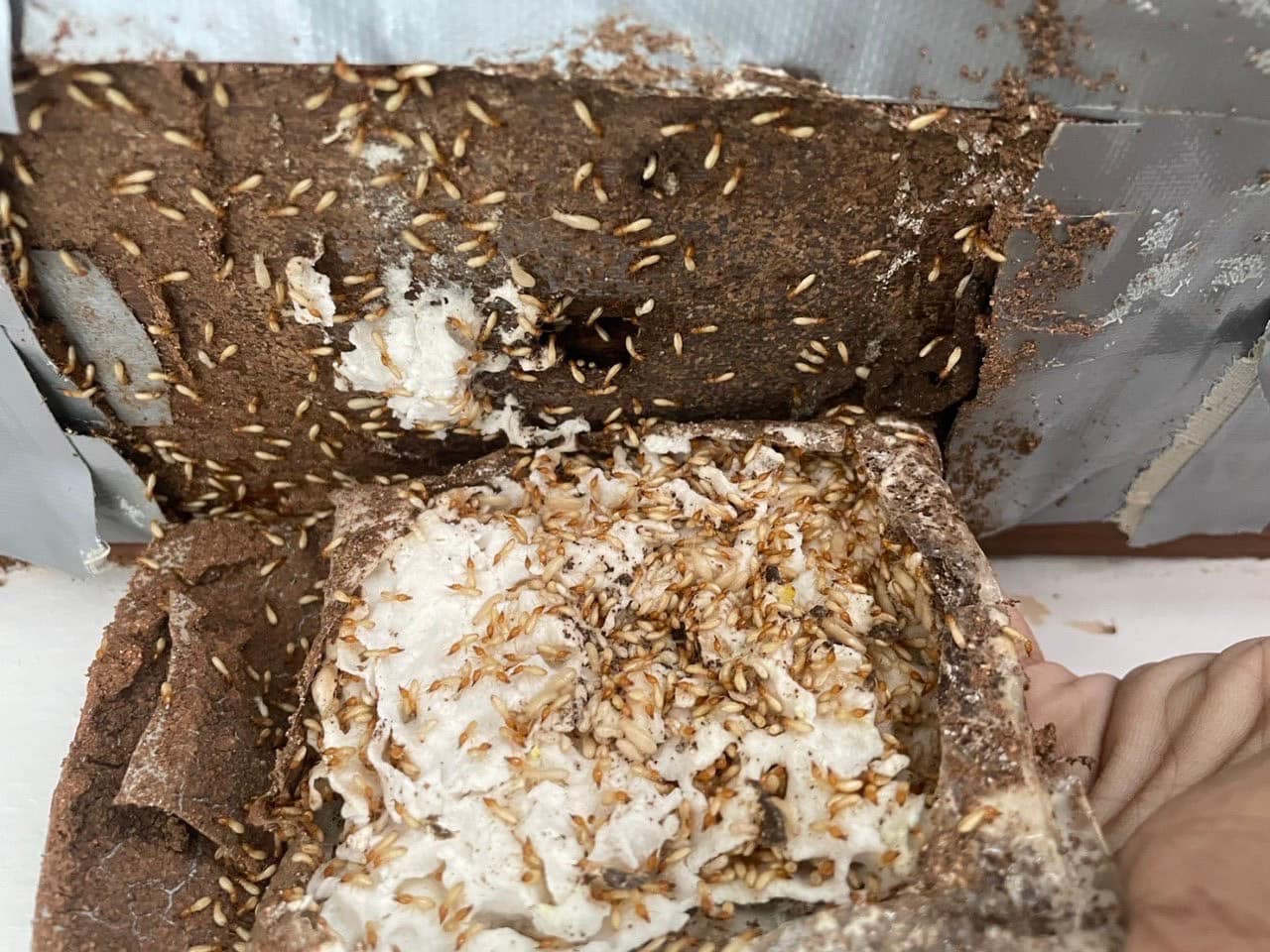
The first pack was placed directly behind the television cabinet, inside an active termite gallery confirmed by inspection.
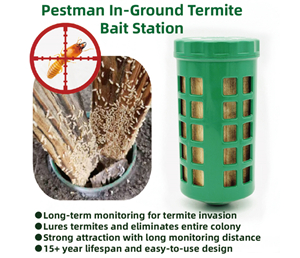
The second pack was installed beneath the study desk, within a monitoring station positioned along the termites’ feeding path.
The technician explained the principle simply.
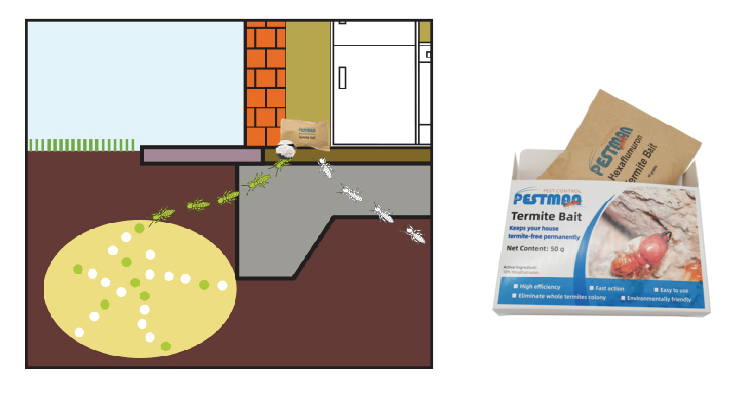
Worker termites would consume the bait and share it with others through natural feeding behaviour. Over time, the active ingredient would prevent the colony from sustaining itself.
The termites would disappear — not suddenly, but completely.
Watching Without Disturbing
One week later, the technician returned.
The bait had been heavily consumed.
Three weeks later, the mud lines had dried. No new ones appeared.
After five weeks, inspections showed no live termite activity at any monitored point.
There had been no drilling, no noise, no chemical smell.
The couple had continued their lives uninterrupted.
The Relief of a Clean Ending
When the technician declared the infestation eradicated, Daniel admitted he had expected something far more dramatic.
Instead, the solution had been almost invisible.
The total cost was significantly lower than what they had budgeted for. More importantly, their home — and their peace of mind — remained intact.
From Private Relief to Public Trust
What happened next surprised even the technicians.
Mei Lin shared their experience in the Mont Kiara community group — not as a warning, but as reassurance.
Within days, neighbours reached out.
One household had noticed a door frame softening. Another had concerns about a balcony timber deck.
Kuala Lumpur Shield responded with the same approach: assess carefully, place bait precisely, avoid unnecessary disruption.
Each case required only small amounts of bait.
The pattern repeated.
A Different Way to Think About Termites
In Mont Kiara, where property values are high and renovations are costly, the story travelled fast.
Residents began to see termite control not as an emergency reaction, but as asset protection.
The Pestman approach — minimal intervention, high effectiveness, low material use — fit naturally into that mindset.
More Than Pest Control
By the end of the year, Kuala Lumpur Shield had adopted Pestman Termite Bait as its primary solution for early-stage residential infestations.
Not because it was aggressive.
But because it was precise.
From One House to a Street: How a Quiet Solution Spread Through Mont Kiara
In Mont Kiara, news does not travel through headlines.
It travels through neighbours.
A short message in a residents’ group.
A conversation at the school gate.
A quiet recommendation over coffee.
When Mei Lin shared her experience online, she did not frame it as a warning. There was no alarmist language, no dramatic photos.
Instead, she wrote something far more disarming:
“We thought termites would mean drilling, mess, chemicals everywhere.
It didn’t.
Two small bait packs. No damage. Problem gone.”
Within hours, the replies began to appear.
“We Thought It Was Just Old Wood”
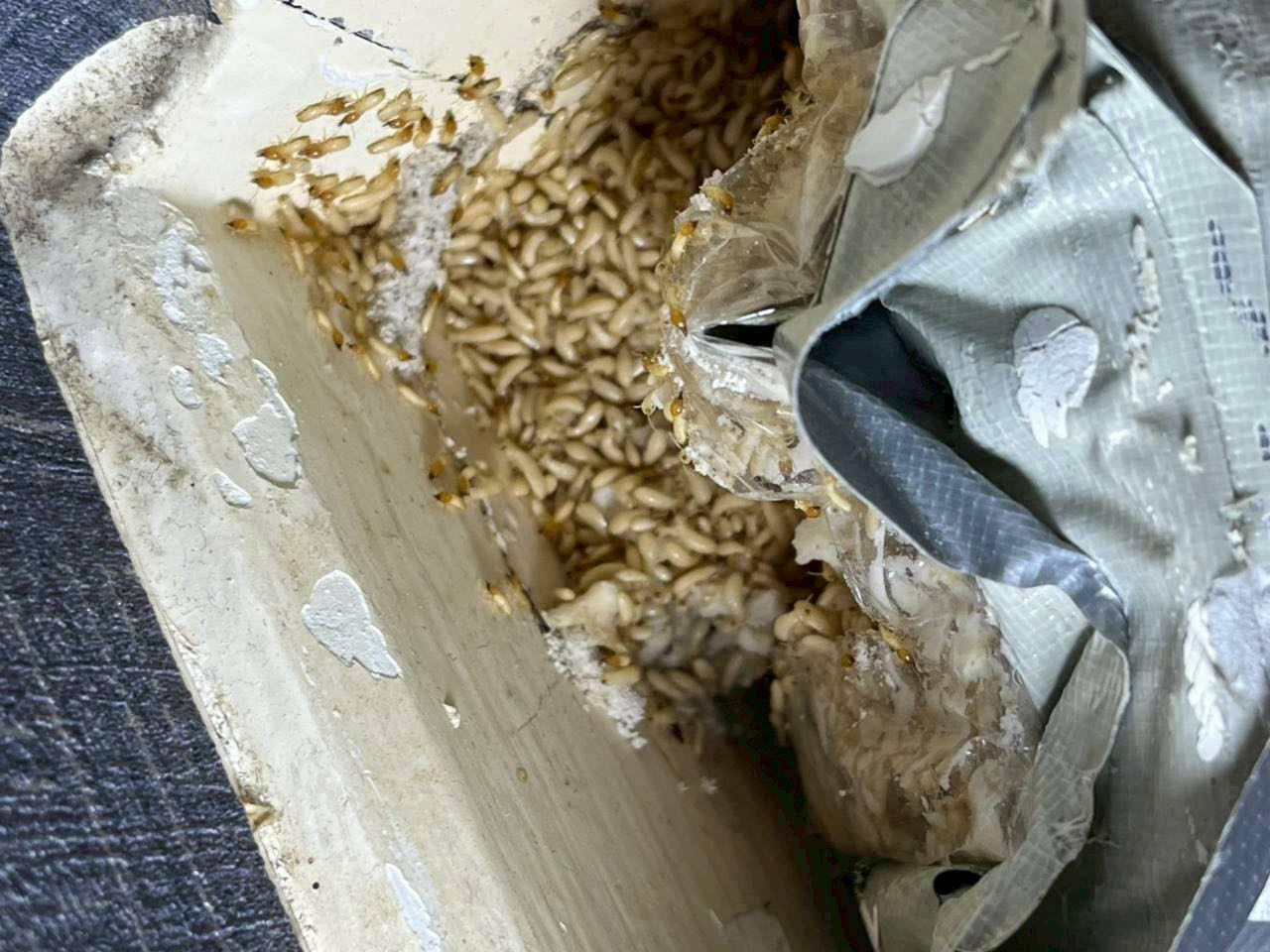
The first response came from a neighbour two houses down the same street. He and his wife had noticed that the wooden door frame at the back entrance no longer felt solid. It had been repainted twice, but the softness remained.
They had assumed it was age.
Another resident replied soon after. In her apartment, the timber decking on a small balcony had begun to sag slightly. A contractor had suggested replacement — at significant cost.
She hesitated.
Now, she was reconsidering.
A Pattern Emerges
Over the following week, Kuala Lumpur Shield received multiple calls — all referencing the same post.
The technician who had treated Daniel and Mei Lin’s home noticed something familiar across these new inspections.
The signs were different — a door frame here, a skirting board there — but the underlying story was the same.
Early-stage infestation.
Localised activity.
High-value interiors.
Owners deeply worried about disruption.
And in most cases, a shared fear:
“We don’t want our house torn apart.”
The Cost of Overreaction
In one nearby villa, the owners had already gone down a different path.
After spotting termites in a storeroom, they had agreed to a full chemical injection treatment proposed by a general contractor. Walls were drilled. Floors were punctured. Furniture had to be moved.
The termites disappeared.
So did several weeks of comfort.
Repairing the cosmetic damage cost nearly as much as the treatment itself.
When the owners heard about the Mont Kiara cases resolved with minimal intervention, the reaction was mixed — relief for others, regret for themselves.
Why Less Can Be More
For Kuala Lumpur Shield, these calls reinforced a lesson the company had learned over years of residential work.
Termite control is not about strength.
It is about behaviour.
Subterranean termites like Coptotermes do not respond predictably to force. Spray them, and they retreat. Flood the soil, and they reroute.
But feed them — slowly and precisely — and they do the work themselves.
This is where Pestman Termite Bait had changed the equation.
Traditional bait systems often required hundreds of grams of material, bulky stations, and repeated handling. Transport alone was inconvenient.
Pestman’s formulation, by contrast, allowed technicians to work with 50-gram packs, using only what was needed — no more.
In Mont Kiara, that distinction mattered.
A Second House, A Familiar Solution
One of the next homes treated belonged to a retired couple who had lived in the neighbourhood for over a decade. Their issue was discovered near the staircase — a structural element they feared would require major repairs.
After inspection, the technician recommended — once again — baiting only.
This time, three packs were used, due to the size of the feeding area. No drilling was required beyond small access points hidden behind existing trim.
The homeowners were sceptical.
They had expected noise, chemicals, days of disruption.
Instead, the process took under an hour.
Within six weeks, the activity had ceased.
Trust Grows Quietly
What followed was not a marketing campaign.
It was something more organic.
Neighbours began asking specific questions:
“How much bait did you use?”
“Did they drill your walls?”
“Did you have to move out?”
The answers were consistent.
No.
No.
No.
Slowly, the narrative around termites in Mont Kiara began to shift.
Termites as a Community Issue
Mont Kiara’s layout — dense, landscaped, interconnected — means that termite problems rarely belong to just one home.
Colonies move underground.
Boundaries mean little to them.
As more residents came forward, it became clear that early, discreet treatment was not just a personal choice, but a community responsibility.
A neglected infestation in one house could, over time, threaten others.
That understanding led several streets to coordinate inspections together — not out of panic, but out of caution.
A New Kind of Preventive Thinking
By the end of the quarter, Kuala Lumpur Shield had placed monitoring stations in multiple properties — not because termites were visible, but because residents wanted certainty.
In many cases, no bait was needed at all.
Where bait was required, the quantities remained small.
Two packs.
Sometimes three.
Never the hundreds of grams that older systems demanded.
Economics Without Alarm
For homeowners, the numbers mattered.
Compared with traditional chemical treatments, the total cost of Pestman-based solutions was consistently lower — not because the product was cheaper, but because:
1) Labour time was reduced
2) Repairs were minimal or unnecessary
3) No temporary relocation was required
In high-end homes, avoiding damage often mattered more than the treatment cost itself.
A Technician’s Perspective
One senior technician summed it up simply:
“Our job is not to make homeowners feel we are doing something big.
Our job is to solve the problem without becoming part of it.”
In Mont Kiara, that philosophy resonated.
From Recommendation to Standard Practice
By mid-year, Kuala Lumpur Shield had quietly revised its internal protocols.
For early and mid-stage residential infestations, Pestman Termite Bait became the first option, not the last.
Chemical injection was reserved for cases where baiting was no longer viable.
The change was not driven by sales targets, but by outcomes.
Fewer callbacks.
Fewer complaints.
More referrals.
The Value of Invisibility
Perhaps the most telling detail was this:
Several homeowners admitted they had almost forgotten the termites entirely — until neighbours asked about them.
The solution had been so unobtrusive that it faded from memory.
In pest control, that is often the highest compliment.
Looking Ahead
Mont Kiara’s experience did not eliminate termites from the ground beneath it.
But it changed how residents responded to them.
Not with panic.
Not with force.
But with precision.
—————————————————————————————————
Indoor Termite Treatment Methods
We Recommend Pestman Termite Bait for indoor termite control
No Need for Detection Devices: The bait itself is a monitoring tool.
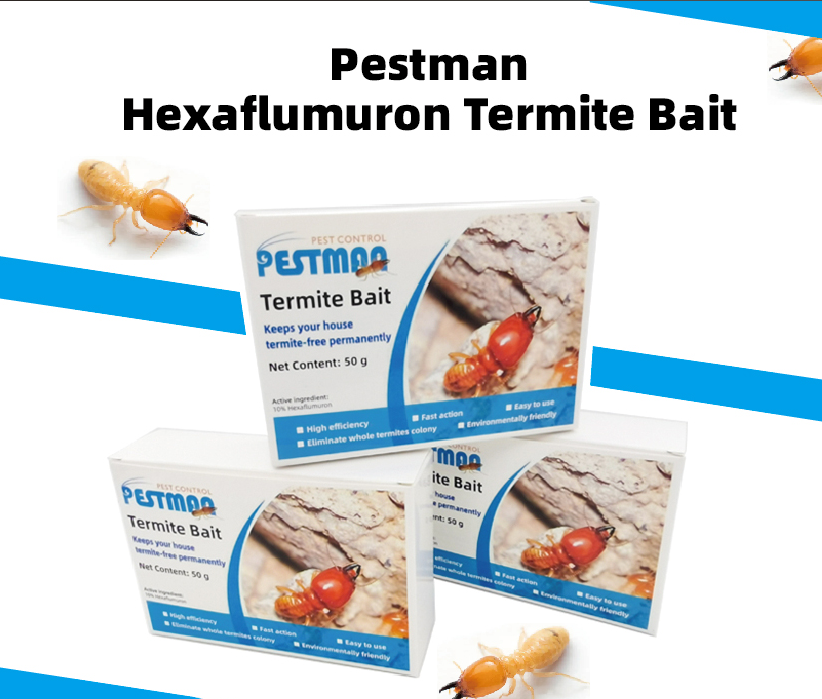
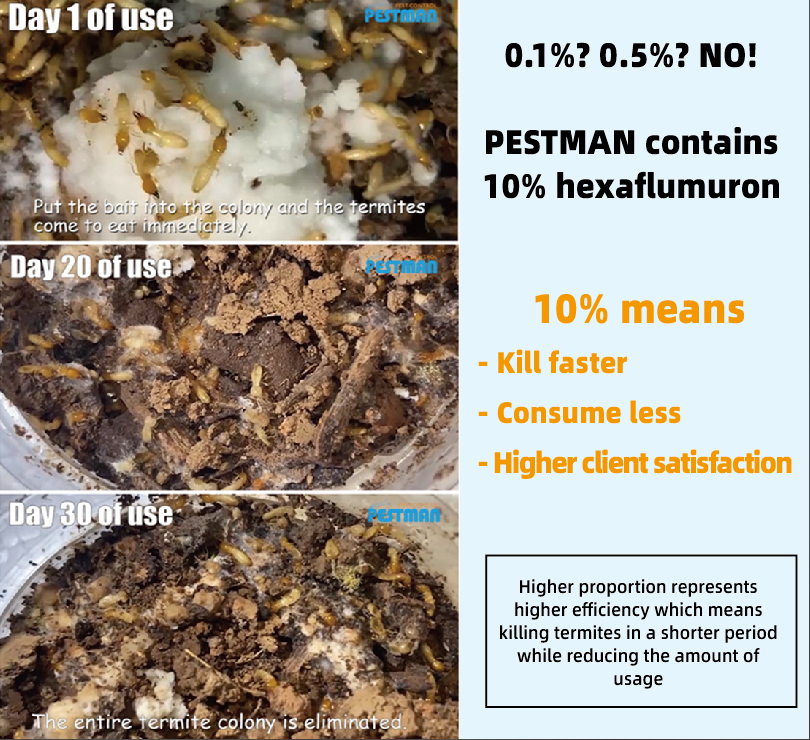
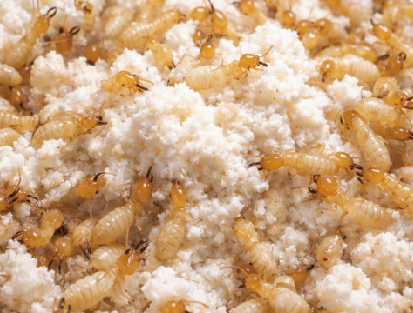
Pestman Hexaflumuron Termite Bait can effectively control and eliminate termites, particularly in wooden structures, by attracting termites to feed on the bait. Pestman Termite Bait is formulated with 10% hexaflumuron, lignocellulose, pheromones and other attractants, which disrupts the termites’ molting process. Once consumed, the bait carries the slow-acting toxic substance that is shared with the entire termite colony, ultimately resulting in the destruction of the entire colony. This method relies on the termites’ natural behavior to spread the poison throughout their social structure, leading to colony-wide elimination. Once termites begin feeding on the bait, they stop feeding on the wood in the building.
Key Components:
Hexaflumuron:
What It Is: Hexaflumuron is a chemical compound primarily used as an insecticide, especially in the control of termites.
Why It’s Important: It works by inhibiting chitin synthesis. Chitin is essential for the termite exoskeleton, and termites need to synthesize it during growth and molting. Hexaflumuron interferes with this process, disrupting termite growth and development, and ultimately leading to their death.
Cellulose (Wood-Based Material):
What It Is: Cellulose is the primary food source for termites, derived from wood or plant materials.
Why It’s Important: Termites are naturally attracted to cellulose, making it the perfect base for bait. It ensures that termites will feed on the bait and carry it back to the colony.
Tracking Pheromones:
What It Is: Tracking pheromones mimic the natural trails termites use to navigate.
Why It’s Important: Tracking pheromones guide termites to the bait station, increasing the likelihood that the bait will be found and eaten.
Aggregation Pheromones:
What It Is: Aggregation pheromones signal to other termites that a food source has been found.
Why It’s Important: They encourage more termites to gather at the bait station, ensuring a higher intake of the bait and faster colony elimination.
Advantages:
– Powerful Killing Effect: Eliminates the queen and the entire colony.
– Flexible Application: Can be used directly or with in-ground and above-ground bait stations.
– Reduced Chemical Exposure: Safe for humans, pets, and the environment. Unlike traditional methods that involve spraying chemicals across a large area, termite bait is healthier for customers.
– Effective Against All Termites: Works on Coptotermes, Reticulitermes, Odontotermes, Macrotermes, and more.
– Versatility for Different Structures: Suitable for various types of buildings, including residential homes, commercial properties, and structures with wooden components.
True professionalism lies not in the number of tools you have but in understanding the behavior of termites—and precisely placed bait is your best tool.
Value for pest control companies:
– Long-Term Protection: Provide long-term protection by eliminating entire colonies, thereby preventing future infestations from the same colony.
– Customer Satisfaction: The effectiveness and safety of baiting systems can lead to higher customer satisfaction and trust.
– Cost Savings: Highly concentrated, requiring only 50g-150g to effectively eliminate a termite colony, making it a cost-efficient solution.
– No Special Skills Required: Simple enough for junior staff to handle installation and observe the results of colony elimination.
– Non-Invasive: Unlike traditional liquid treatments, termite bait are less invasive and do not require extensive drilling or excavation, preserving the structural integrity of the treated properties.
– Differentiation: Offering advanced baiting technology can differentiate a pest control company from competitors, showcasing their commitment to using the latest and most effective methods.
– Enhanced Reputation: Adopting Pestman termite bait shows pest control companies’ commitment to environmentally responsible practices, ensuring regulatory compliance and appealing to eco-conscious consumers.

Why Choose Pestman?
As a pest control company, you need to provide clients with efficient, safe, and reliable termite control solutions. By choosing Pestman, you will gain access to industry-leading termite control products like Pestman Termite Bait, which uses advanced formulations to precisely attract and eliminate termites, ensuring long-term protection. Pestman also offers comprehensive technical support and training to help you enhance service quality and build client trust. We provide logistics support for the Philippines, Indonesia, Vietnam, Cambodia, Singapore, Malaysia, Thailand, and other regions, with door-to-door delivery. Contact us today, and let’s cooperate to help more clients effectively solve their termite problems!
WhatsApp: +8618958096066
You can also reach us through the chat window in the lower-right corner of our website.