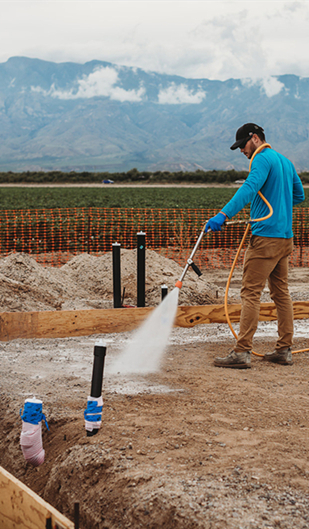
How to Identify Termite Presence in a Tree
Identifying termite infestation in a tree requires careful observation of specific signs. Subterranean termites, the primary culprits behind tree infestations, leave distinct indicators that can help confirm their presence. Here’s how to detect termites in a tree:
1. Presence of Mud Tubes
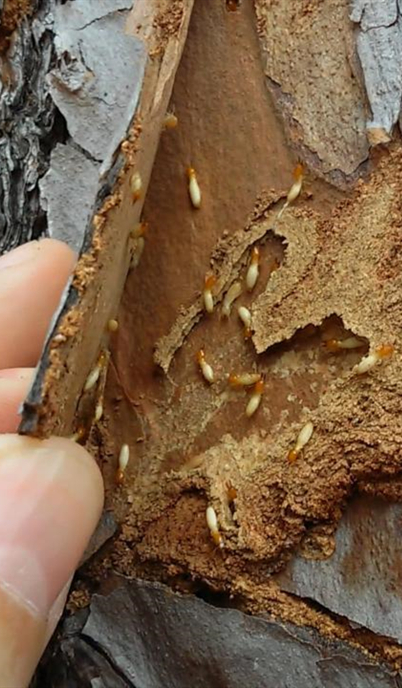
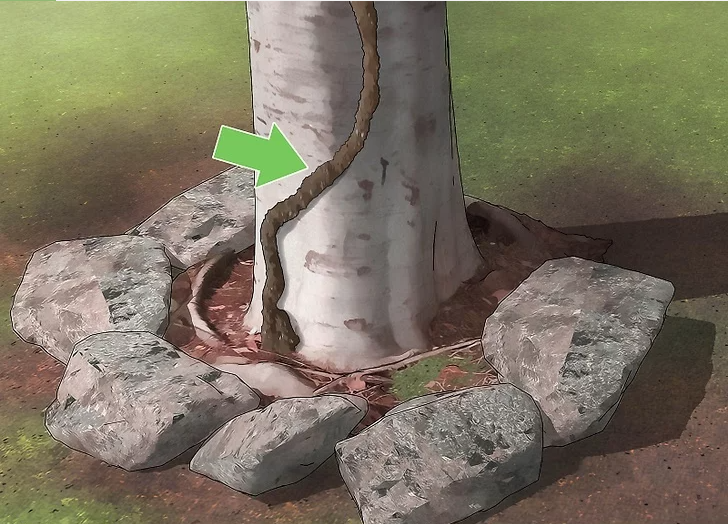
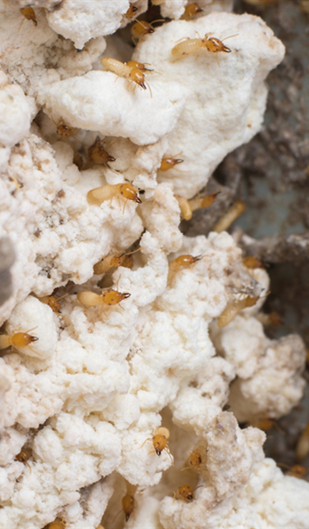
Mud tubes are one of the most visible signs of termite activity. These pencil-width structures run along the tree trunk and act as “highways” for termites to travel between the ground and the tree.
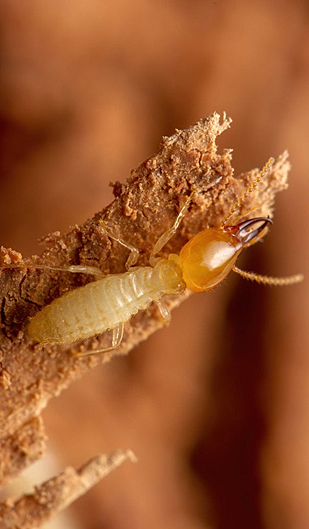
The tubes are built to keep termites hydrated and protected from external threats. To confirm the infestation, gently break open a section of the mud tube. If termites are active, you’ll see worker and soldier termites inside. Workers are wingless and light brown, while soldiers have distinct body shapes suited for defense.
2. Hollow Sound in Tree Branches
Termites consume the cellulose in wood, often hollowing out the internal structure of tree branches. To check for this, tap larger branches with your knuckles. If the sound is hollow, it indicates significant internal damage, suggesting an advanced infestation.
3. Winged Termites (Swarmers)
Swarmers, or reproductive termites, can be observed around the tree during certain seasons like spring, summer, or fall. These termites have wings and brownish-black bodies and emerge as part of the colony’s reproduction cycle. Their presence near the tree is a clear sign of termite activity.
4. Soft Wood or Penetration Test
Subterranean termites weaken trees by feeding on the cellulose in tender parts of the wood. To test for damage, use a screwdriver or knife to tap near the base of the tree. If the tool easily penetrates the wood, it indicates significant internal damage caused by termites.
5. Visible Damage
Examine the tree closely for external signs of damage. Though termites usually work inside the tree, you might spot visible deterioration or chew marks in advanced cases.
Professional technicians conduct a thorough inspection of the trees to identify the termite species (such as the common Coptotermes formosanus), the location of the termite nest, the extent and severity of the infestation. This helps in formulating a targeted treatment plan.
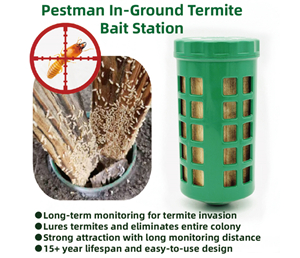
Use In-ground Termite Bait Stations
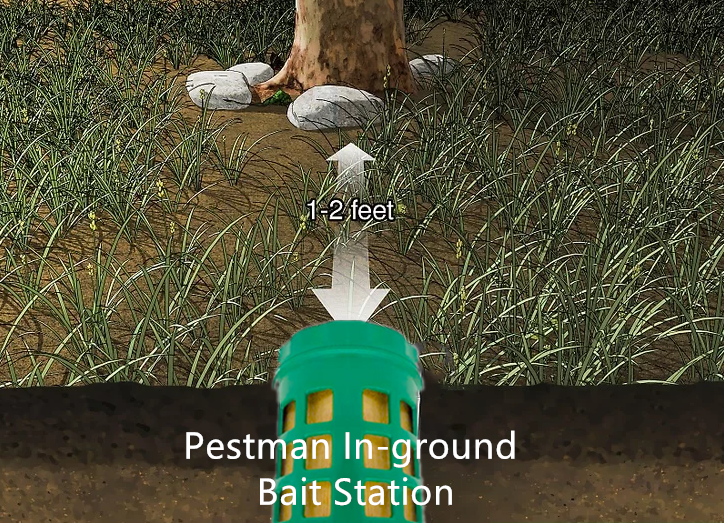
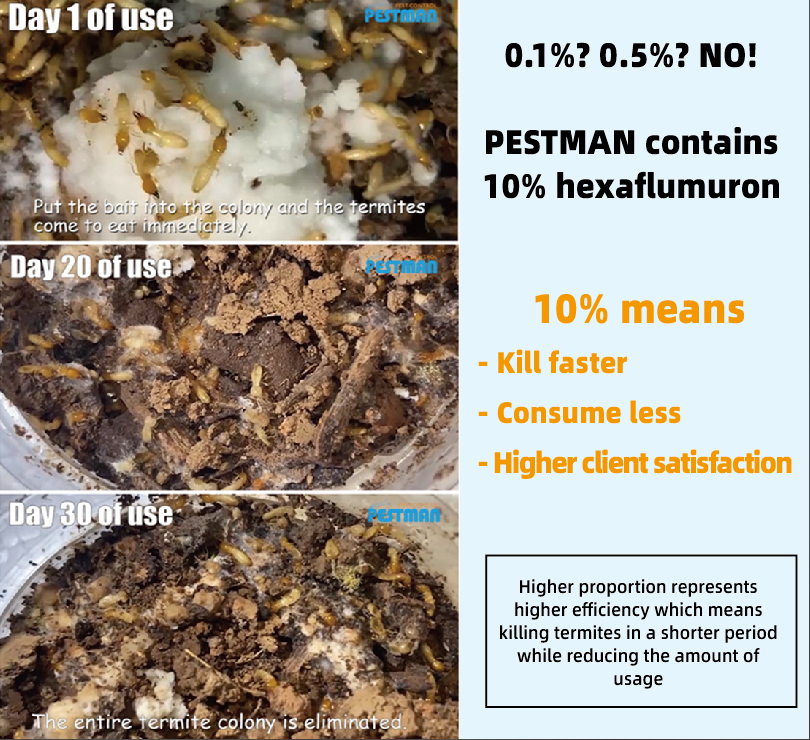
Stick the in-ground bait stations 1–2 ft (30–61 cm) from the base. Bait stations attract termites with their favorite food: termite bait. The termite bait is treated with a slow-acting insecticide that the termites carry into their colony. Select baits that are attractive to termites, such as those containing ingredients like hexafluron. According to research, 10% hexaflumuron bait has a good killing effect on Coptotermes formosanus colonies in trees. Applying 100 – 200g of bait per nest can kill the entire colony within 28 – 42 days.
2-3 evenly-spaced bait stations should do the trick. Put 1 station close to the termite’s entry area at the base. It can take a month (or longer) for bait stations to eradicate a colony, so this isn’t the fastest solution. If your infestation is severe, go with a faster-acting option (like liquid termiticide). If you want to be extra thorough, you can use bait stations as a secondary line of defense after applying chemical treatments.
Use Above-ground Termite Bait Station
To eliminate termites in trees using above-ground bait stations, begin by locating the mud tubes. These tubes indicate active termite infestation. Once identified, clean a small section of the mud tubes and install an above-ground bait station directly on or near the tube. The station contains termite bait infused with a slow-acting termiticide that termites consume and carry back to their colony. Secure the station firmly to ensure termites can easily access it. Regularly inspect the station and replenish the bait as needed. Over time, as termites distribute the toxic bait throughout their colony, the population will decline and eventually collapse. This targeted approach effectively controls termite infestations in trees while minimizing environmental impact and protecting surrounding ecosystems.
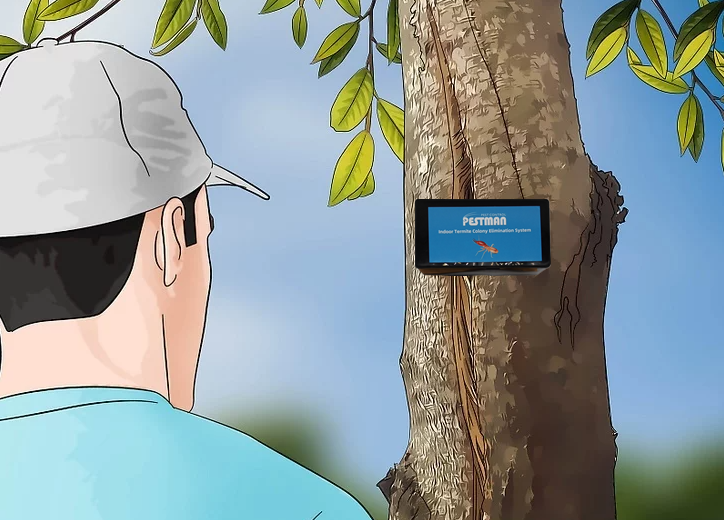
Continue monitoring the tree after treatment
Pest control companies should conduct regular follow-up visits within a certain period after treatment to check the effectiveness of termite control and ensure that the termites have been completely eradicated. Provide subsequent maintenance suggestions and services based on the growth of the trees and the long-term needs of termite prevention, such as regular inspections and preventive treatments, to protect the trees from termite infestation in the long term.
Different pest control companies may flexibly use these methods or adopt other appropriate techniques according to their experience, technical means, and specific situations to deal with termite problems in trees. At the same time, it is crucial to follow relevant environmental protection and safety regulations during the treatment process.
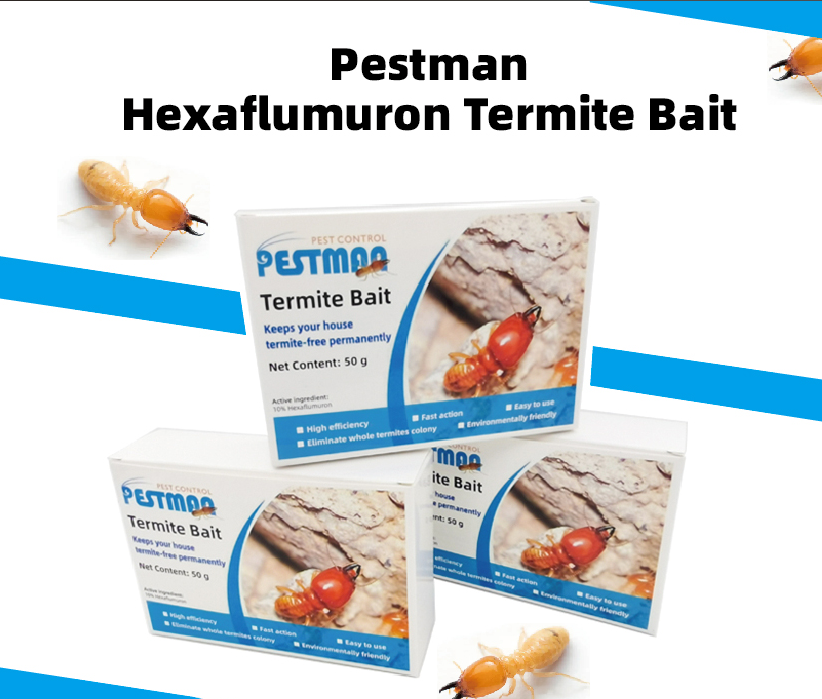
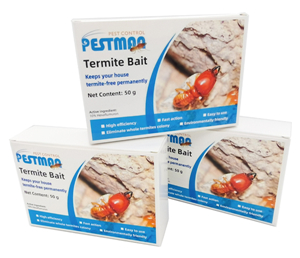
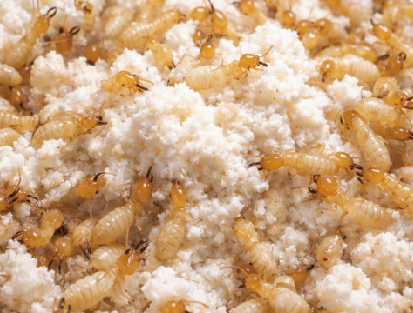
Pestman Hexaflumuron Termite Bait can effectively control and eliminate termites, particularly in wooden structures, by attracting termites to feed on the bait. Pestman Termite Bait is formulated with 10% hexaflumuron, lignocellulose, pheromones and other attractants, which disrupts the termites’ molting process. Once consumed, the bait carries the slow-acting toxic substance that is shared with the entire termite colony, ultimately resulting in the destruction of the entire colony. This method relies on the termites’ natural behavior to spread the poison throughout their social structure, leading to colony-wide elimination. Once termites begin feeding on the bait, they stop feeding on the wood in the building.
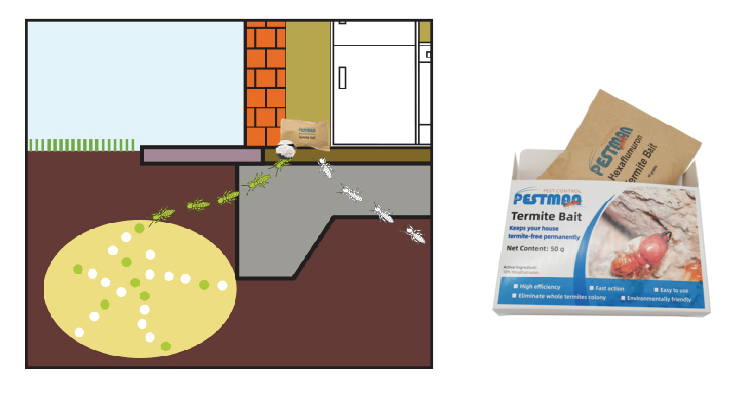
Key Components:
Hexaflumuron:
What It Is: Hexaflumuron is a chemical compound primarily used as an insecticide, especially in the control of termites.
Why It’s Important: It works by inhibiting chitin synthesis. Chitin is essential for the termite exoskeleton, and termites need to synthesize it during growth and molting. Hexaflumuron interferes with this process, disrupting termite growth and development, and ultimately leading to their death.
Cellulose (Wood-Based Material):
What It Is: Cellulose is the primary food source for termites, derived from wood or plant materials.
Why It’s Important: Termites are naturally attracted to cellulose, making it the perfect base for bait. It ensures that termites will feed on the bait and carry it back to the colony.
Tracking Pheromones:
What It Is: Tracking pheromones mimic the natural trails termites use to navigate.
Why It’s Important: Tracking pheromones guide termites to the bait station, increasing the likelihood that the bait will be found and eaten.
Aggregation Pheromones:
What It Is: Aggregation pheromones signal to other termites that a food source has been found.
Why It’s Important: They encourage more termites to gather at the bait station, ensuring a higher intake of the bait and faster colony elimination.
Advantages:
– Powerful Killing Effect: Eliminates the queen and the entire colony.
– Flexible Application: Can be used directly or with in-ground and above-ground bait stations.
– Reduced Chemical Exposure: Safe for humans, pets, and the environment. Unlike traditional methods that involve spraying chemicals across a large area, termite bait is healthier for customers.
– Effective Against All Termites: Works on Coptotermes, Reticulitermes, Odontotermes, Macrotermes, and more.
– Versatility for Different Structures: Suitable for various types of buildings, including residential homes, commercial properties, and structures with wooden components.
True professionalism lies not in the number of tools you have but in understanding the behavior of termites—and precisely placed bait is your best tool.
Value for pest control companies:
– Long-Term Protection: Provide long-term protection by eliminating entire colonies, thereby preventing future infestations from the same colony.
– Customer Satisfaction: The effectiveness and safety of baiting systems can lead to higher customer satisfaction and trust.
– Cost Savings: Highly concentrated, requiring only 50g-150g to effectively eliminate a termite colony, making it a cost-efficient solution.
– No Special Skills Required: Simple enough for junior staff to handle installation and observe the results of colony elimination.
– Non-Invasive: Unlike traditional liquid treatments, termite bait are less invasive and do not require extensive drilling or excavation, preserving the structural integrity of the treated properties.
– Differentiation: Offering advanced baiting technology can differentiate a pest control company from competitors, showcasing their commitment to using the latest and most effective methods.
– Enhanced Reputation: Adopting Pestman termite bait shows pest control companies’ commitment to environmentally responsible practices, ensuring regulatory compliance and appealing to eco-conscious consumers.
Why Choose Pestman?
As a pest control company, you need to provide clients with efficient, safe, and reliable termite control solutions. By choosing Pestman, you will gain access to industry-leading termite control products like Pestman Termite Bait, which uses advanced formulations to precisely attract and eliminate termites, ensuring long-term protection. Pestman also offers comprehensive technical support and training to help you enhance service quality and build client trust. We provide logistics support for the Philippines, Indonesia, Vietnam, Cambodia, Singapore, Malaysia, Thailand, and other regions, with door-to-door delivery. Contact us today, and let’s cooperate to help more clients effectively solve their termite problems!
WhatsApp: +8618958096066
You can also reach us through the chat window in the lower-right corner of our website.